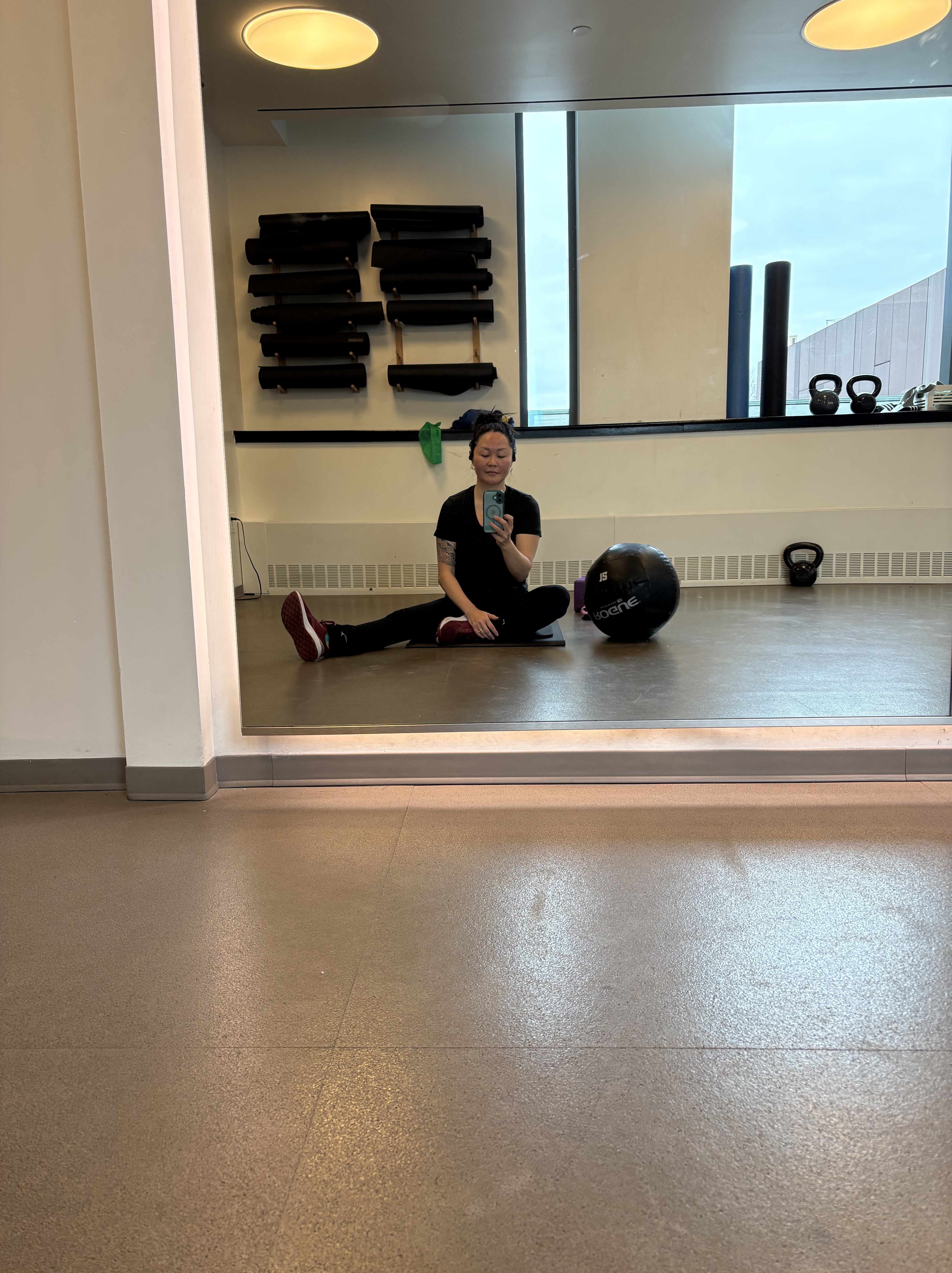
The Athlete I’m Becoming Now
Lately, I’ve been thinking a lot about what it means to be an athlete — not who I was, but who I am becoming now.
For most of my life, being an athlete meant pushing through. Training harder. Ignoring pain. Measuring progress by output, endurance, and results. Like many athletes of my generation, I learned early that my body was something to override in service of performance.
Now, in my late 40s, my relationship with my body is asking for something different.
I live with chronic pain — the quiet accumulation of years of overtraining and asking my body to do more than it could sustainably hold. I’m preparing for hip surgery this February, and with it comes a season of reckoning, grief, care, and unexpected clarity.
What I’m learning is this:
My body is not failing me. It’s communicating.
Listening to it requires a very different kind of strength than the one I was trained to value.
There’s a part of me that still identifies — deeply — as an athlete.
The way I keep at something until I’ve mastered it.
My (sometimes obsessive) pull toward precision and improvement.
Putting in the time and the reps.
Enjoying the moment of completion — and then immediately wondering how it could be done better.
That part of me hasn’t gone away.
But the metrics have changed.
Right now, my version of “elite” looks like mobility.
Consistency.
Range of motion.
Trust.
My current Olympics are about walking with minimal pain. Moving with intention. Treating my body not as an obstacle or a machine, but as something sacred — something worthy of care.
And strangely, this doesn’t feel like the end of my athletic identity.
It feels like a reclamation.
There’s grief in this season, too. And I don’t say that dramatically.
It’s the quiet grief of realizing that the strategies that once kept me successful are no longer the ones that will keep me well. Releasing an old definition of strength. Accepting that my body now asks for collaboration instead of command.
For a long time, I believed that listening to my body meant giving something up.
What I’m learning is that listening is actually how I stay in relationship with it.
So…it’s time.
To question the old goals I was trained to chase — the ones marked by endurance, tolerance, and pushing through…
And ask different questions:
What helps me move tomorrow, not just today?
What allows my body to feel safe enough to trust me again?
What does strength look like when the goal is longevity, not sacrifice?
These questions feel strange. No one asked me these questions when I was in elementary school, high school, or college.
They’re also exactly what I need to be thoughtful about right now.
As I sit with this, I find myself thinking often about the athletes and clinicians I work with.
I see versions of this reckoning in athletes recovering from injury, whose bodies no longer respond the way they once did — and whose identities feel suddenly unmoored. I hear it in the voices of former athletes who wonder if they still “count” when their relationship to movement changes. And I notice it in clinicians and coaches who are holding space for these transitions while quietly navigating changes in their own bodies, too.
So many people in sport were taught the same lesson I was:
that care comes after performance, if at all.
This season is gently — persistently — teaching me otherwise.
Care isn’t the opposite of athleticism.
It’s what makes athleticism sustainable.
I don’t yet know exactly what this next chapter of my athletic life will look like. But I do know this: the landing I’m redefining now isn’t about proving anything.
It’s about staying in relationship with my body.
It’s about mobility, presence, and trust.
It’s about choosing care not as a concession, but as a form of mastery.
And that feels like an athlete I can keep becoming.
Stay Connected
For weekly reflections on athlete identity, injury, resilience, and whole-person care, visit lcollinslcsw.com/athleteilluminated.
In solidarity,
Laura
Reflection Prompts
Take a few moments to explore:
- What goals did I inherit from my sport or performance culture that may need revisiting?
- How does my body communicate with me when I slow down enough to listen?
- What does “strength” look like for me in this season of my life?
- Where might care be an act of mastery rather than a loss?
Note: This and every Athlete Illuminated post is for educational purposes only and not a replacement for mental health treatment. If you are in urgent need of mental health support, please call 9-8-8. If you are experiencing an emergency, please call 9-1-1 or go to your nearest emergency room. For ongoing mental health concerns, consider seeking professional support or therapy.

Leave a Reply to cynthia660Cancel reply