
Picture this: A young swimmer stands at the edge of the pool, eyes fixed on the Olympic records posted on the wall. Their coach notices the intensity, the desire to reach those times immediately. Sound familiar?
As athletes, coaches, and parents, we’ve all felt that pull toward immediate results. We live in a world of instant everything…instant messaging, instant replays, instant gratification. But athletic mastery? That follows an entirely different timeline.
The Mountain Ahead
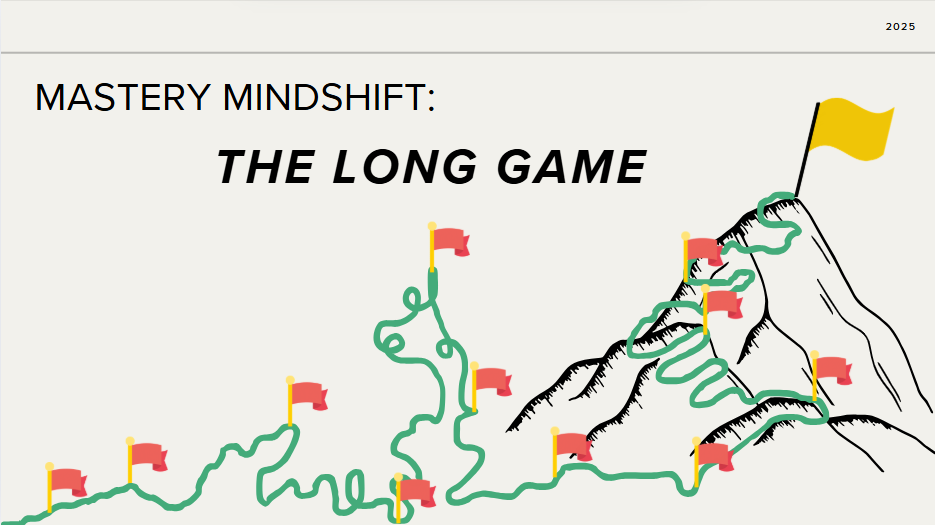
Your athletic journey isn’t a straight shot to the top. It’s more like the winding path up a mountain, with flags marking meaningful milestones along the way. Each flag represents a small victory, a skill mastered, a personal best achieved, or simply showing up when you didn’t feel like it.
The yellow flag at the summit? That’s your ultimate goal. But here’s the mindshift that changes everything: the journey to that peak is where the real magic happens.
Why the Long Game Wins
Mental Health: Building Resilience, Not Pressure
When we fixate on distant outcomes, we create a mental pressure cooker. The swimmer staring at Olympic times might train with desperation rather than dedication. But when we shift focus to the process—improving stroke technique this week, building endurance this month—we build sustainable confidence.
Athletes who focus on the long game develop:
- Emotional regulation during setbacks
- Growth mindset that sees challenges as opportunities
- Internal motivation that doesn’t depend on external validation
- Mental toughness built through consistent small wins
Physical Health: Sustainable Progress Over Quick Fixes
The body tells the truth about shortcuts. Push too hard, too fast, and injuries follow. Skip the foundation work, and performance plateaus.
Long-game athletes understand that:
- Consistent training trumps intense spurts
- Recovery is as just as important as the workout
- Technique mastery prevents injury and accelerates progress
- Gradual progression builds lasting strength
Emotional Wellbeing: Finding Joy in the Process
Here’s what happens when athletes shift to long-game thinking: they start enjoying their sport again. The pressure to perform immediately lifts, replaced by curiosity about improvement. Training becomes exploration rather than desperation.
The Art of Pacing Yourself
Think of a marathoner who goes out too fast in the first mile. They might lead temporarily, but mile 20 tells a different story. Athletic development works the same way.
For Young Athletes:
- Focus on one skill at a time rather than trying to master everything at once
- Celebrate small improvements, like shaving seconds off a time, or perfecting a movement pattern
- Remember that your body and mind are still developing; give them time!
For Coaches:
- Design training progressions that build systematically
- Help athletes set process goals alongside outcome goals
- Model patience and long-term thinking in your own coaching approach
For Parents:
- Resist the urge to compare your child’s timeline to others
- Support the process of your child’s development as a whole person
- Remember that athletic development isn’t linear—plateaus and setbacks are normal
- Take care of yourself, too! Our athletes’ needs (practice, education, nourishment, socialization, etc.) can take so much time and energy from your own needs and wants. Please make sure to include time for yourself to hydrate, nourish, and replenish!
Accomplishing Smaller Goals: The Flag Strategy
Every flag on that mountain path represents a meaningful milestone. In sports, these might be:
- Technical flags: Mastering a new technique or movement pattern
- Physical flags: Hitting strength or endurance benchmarks
- Mental flags: Competing without anxiety, or bouncing back from mistakes
- Competitive flags: Personal bests, team leadership moments, or strong performances under pressure
The key is making these flags visible and meaningful. When a basketball player finally masters their left-hand dribble or a runner completes their first injury-free season, those victories deserve recognition.
The Compound Effect in Action
Here’s the beautiful truth about the long game: small improvements compound dramatically over time. A swimmer who improves their technique by just 1% each week will be unrecognizable in a year. A young soccer player who focuses on first touches and field vision will develop game intelligence that sets them apart.
But this only works with consistency and patience – qualities that our instant-gratification culture doesn’t naturally cultivate.
Practical Steps for the Long Game
Week by Week:
- Set one specific, achievable improvement goal
- Track process metrics, not just outcomes
- Reflect on what you learned, regardless of results
Month by Month:
- Assess technical and physical development
- Adjust training loads and focuses based on progress
- Celebrate milestone achievements with your team or family
Season by Season:
- Build systematically on previous foundations
- Expand challenges gradually
- Maintain perspective on multi-year development arcs
When the Summit Calls
Will you eventually reach that yellow flag at the peak? Maybe. Maybe not in the way you originally imagined.
But here’s what the long game teaches us: the athlete who reaches the summit isn’t necessarily the most talented. They’re the one who learned to love the climb.
They’re the one who collected every flag along the way, who built unshakeable foundations, who developed not just physical skills but the mental and emotional resilience that serves them long after their competitive days end.
Your Next Flag
Look ahead on your path. What’s the next flag you can plant? What small victory can you achieve this week, this month, this season? That flag might seem insignificant compared to the summit, but it’s the most important one because it’s within reach, and it’s part of the journey that builds champions.
The long game isn’t about lowering your ambitions. It’s about raising your process. It’s about understanding that true mastery isn’t a destination you arrive at suddenly. It’s a way of traveling that transforms not just your performance, but who you become along the way.
Remember: Every elite athlete you admire once stood where you stand now, looking up at their own mountain. The difference isn’t talent. It’s the decision to embrace the long game and trust the process, one flag at a time.
Ready to Start Your Long Game Journey?
Making the mindshift from short-term sprints to long-term growth isn’t always easy, especially when the culture around us demands immediate results. If you’re an athlete struggling with performance anxiety, a coach looking to build more resilient players, or a parent wanting to support your child’s healthy athletic development, you don’t have to navigate this journey alone.
Sometimes we need support in developing the mental tools and perspectives that make the long game possible. As a licensed clinical social worker specializing in athletic performance and mental health, I work with athletes, coaches, and families to build the psychological foundations that sustain both mindful performance and lifelong wellbeing.
📝 Subscribe to Athlete Illuminated for weekly reflections on mental performance, resilience, and finding joy in the athletic journey
How to connect with me:
The mountain is waiting, and your next flag is closer than you think.
All the best,
Laura
Note: This and every Athlete Illuminated post is for educational purposes only and not a replacement for mental health treatment. If you are in urgent need of mental health support, please call 9-8-8. If you are experiencing an emergency, please call 9-1-1 or go to your nearest emergency room. For ongoing mental health concerns, consider seeking professional support or therapy.


 The Athlete Psychotherapist
Leave a reply to The Athlete Psychotherapist Cancel reply