With the Olympics underway, I’ve been thinking about what this season brings up for so many athletes — and for the people who care about them.
Not just excitement and pride.
Not just awe for the performances we’re watching unfold.
But also the quieter feelings that arrive alongside them.
This time can stir deep joy for the athletes competing — and, at the same time, sadness, grief, or longing for stories that didn’t unfold as hoped.
I’ve been thinking about a steadier kind of care in sport.
Not performance-based approval.
Not care that disappears when the results change.
But the kind that says: I see you. What you gave mattered. You mattered.
This is a love letter — not to the athletes we’re cheering for on our screens (and we are cheering wholeheartedly!), but to the countless athletes whose Olympic dreams ended quietly, painfully, or too soon.
The almost stories.
The ones whose bodies, lives, or systems changed the path.
This is for you.
Dearest Forever Athlete,
It’s another Olympic year — that time when the world’s best come together to compete and celebrate extraordinary accomplishment.
And if you were one of the hundreds of thousands of athletes worldwide who didn’t achieve your “Olympic dream,” this season can bring up complicated feelings.
Career-ending injuries.
Missed the team by one spot.
Abuse.
Boycotts.
Political upheaval.
So many almost stories.
And every one of them held a real dream.
My own almost story centers on career-ending injuries.
Now in my late 40s, I live with chronic pain — and, in a strange twist of timing, I’m undergoing hip surgery today — brought on by wear-and-tear and injuries sustained during the ’80s and ’90s within a sport culture that believed harshness built strength. Little girl bodies and minds were expected to endure adult-level demands, with no room for recovery, repair, or dissent.
Back then, gymnastics was infamous not only for its physical toll — overtraining and nutrition deprivation — but for its emotional and psychological harm. Insults and gaslighting were commonplace. Coaches called us names like useless and imbecile. Isolation and exhaustion were considered necessary ingredients for success.
At ten years old, my teammates and I — all elite gymnasts — trained upwards of 46 hours a week in a well-known gym in Houston, Texas. We were named, “Group One.” We were the first in and the last out of practice, every day.
If we were injured, we were called lazy.
Water breaks were denied.
Doctors were controlled by the system.
There was no such thing as full recovery.
By age twelve, I had no cartilage left in my elbows. Bone fragments locked my joints. After two surgeries, I was forced to retire.
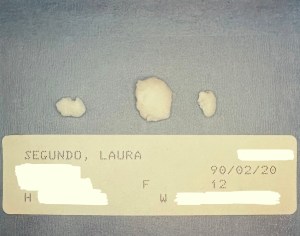
Retired. At twelve years old.
Doesn’t that sound absurd?
After years inside that tightly controlled world, I returned home unmoored. There was no coaching for how to not be an elite athlete.
People told me, “Have fun. Be a normal kid.”
But what was normal?
My idea of joy was flipping on a beam — something my body could no longer do without pain.
And the conditioning didn’t end when gymnastics did.
For decades, I carried the belief that I had failed — that my injuries meant I wasn’t strong enough. Speaking up was framed as bitterness. Silence felt safer.
As a Woman of Color and a child of immigrants, I had already learned to endure quietly, to work hard without complaint. That lesson followed me into adulthood — into workplaces where I was overlooked, or expected to absorb harm without protest.
I lived with disordered eating. With body shame. With self-blame.
And then, in 2020, something shifted.
My child reached the age I was when I trained in Houston.
And I realized:
If anyone treated my child the way I had been treated, I would call it what it was.
Not harsh.
Not toxic.
Abuse.
It took over thirty years — and becoming a parent — to understand and name that truth.
Since then, I’ve reconnected with teammates and family members, sharing stories we were once conditioned to silence. Trauma scattered our memories, but telling our stories helped us find one another again.
And something else emerged:
We were extraordinary athletes then.
And we are still, today.
That mindset — the one that taught our bodies to fly, to endure, to focus — never leaves us.
We are forever athletes.
There’s a scene in Field of Dreams that always makes me tear up. When Moonlight Graham steps across the line and loses his ability to play baseball, Shoeless Joe Jackson calls out to him:
“Hey kid. You were good.”
To my Group One teammates — and to every Forever Athlete reading this:
You were good.
Your dream was real.
And it mattered.
We’ve gone through hell and back, often feeling alone…but we’re not.
We have each other. I am here to listen. And thank you for hearing my story.
Just by being here, sharing our experiences, cheering for each other – we win the Life Olympics, every day.
I am proud to be Group One, and honored to be in community with every one of you.
In solidarity,
Laura
Reflection Prompts
For Forever Athletes
- What parts of your athletic self are still alive in you today?
- What do you wish someone had said to you when your sport ended?
- Where might your body still be holding stories that deserve compassion?
- What would it feel like to honor your athletic identity without needing to justify it?
For Those Who Support Athletes
- What almost stories might be living quietly around you?
- How do the messages you send about worth, rest, and recovery land over time?
- Where might love, steadiness, or recognition matter more than advice?
- How can you help athletes carry their stories with dignity — not silence?
Note: This and every Athlete Illuminated post is for educational purposes only and not a replacement for mental health treatment. If you are in urgent need of mental health support, please call 9-8-8. If you are experiencing an emergency, please call 9-1-1 or go to your nearest emergency room. For ongoing concerns, consider seeking professional support or therapy.
 The Athlete Psychotherapist
Leave a comment