

Coaches are often seen as the steady ones.
The leaders, the motivators, the people who hold it all together.
What’s less visible is what many coaches carry quietly behind the scenes.
They worry they’re failing athletes they deeply care about.
They carry responsibility for outcomes they don’t fully control.
They feel pressure to be “strong” at the expense of being human.
They second-guess decisions long after practice ends.
They push through burnout because others depend on them.
Coaching is leadership under constant evaluation.
Decisions are scrutinized. Results are public. And emotional labor — caring, worrying, holding space — often goes unnamed.
In many sport cultures, coaches are expected to be endlessly resilient. To absorb pressure without showing strain. To lead without needing support themselves.
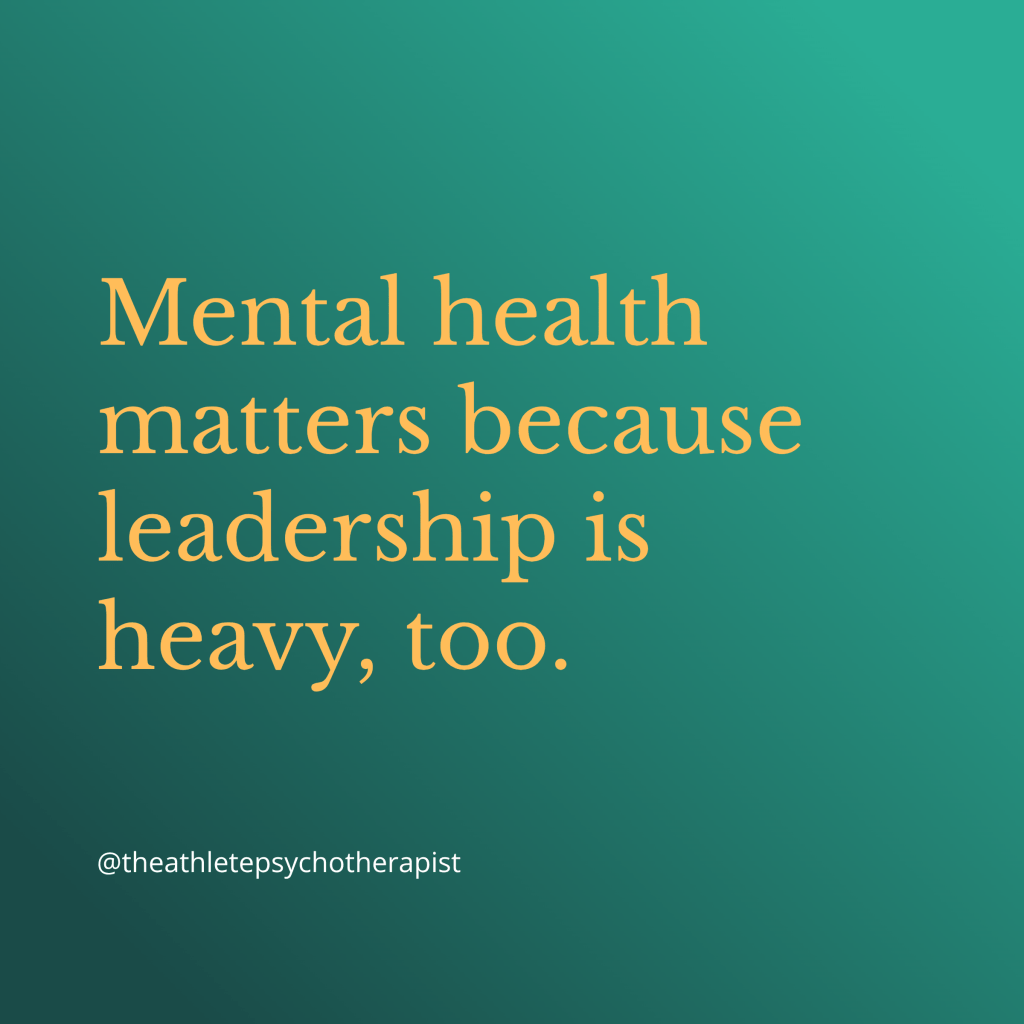
Mental health matters because leadership is heavy.
When coaches don’t have space to process stress, uncertainty, or burnout, it doesn’t disappear — it just moves underground. And eventually, it affects communication, relationships, and the culture athletes experience every day.
Supporting athlete mental health means supporting the people who lead them.
That includes creating environments where coaches can reflect, ask questions, receive guidance, and be seen as whole human beings — not just performance managers.
Healthy athletes are shaped by healthy leadership.
And healthy leadership requires care, not just endurance.
Is this post connecting with you? Trust me, you’re not alone.
Coaching is meaningful and demanding work, and many coaches are navigating pressure and responsibility without much space to reflect. You are welcome to explore resources here that support both leadership and wellbeing.
Feel free to also subscribe to this blog community, Athlete Illuminated, where every week we talk athlete mental health, identity, and the systems that shape performance and sustainable leadership.
All the best,
Laura
A moment to reflect
You might hold these questions gently, without trying to solve anything.
- Where do you feel the weight of responsibility most as a coach or leader?
- What parts of your role feel hardest to share with others?
- What kind of support would make leadership feel more sustainable for you?
Reflection isn’t weakness — it’s part of ethical leadership.
Note: This and every Athlete Illuminated post is for educational purposes only and not a replacement for mental health treatment. If you are in urgent need of mental health support, please call 9-8-8. If you are experiencing an emergency, please call 9-1-1 or go to your nearest emergency room. For ongoing mental health concerns, consider seeking professional support or therapy.
 The Athlete Psychotherapist
Leave a comment