Over the last few weeks, I’ve been writing about bodies and systems — about redefining goals, and about what bodies reveal when sport cultures don’t evolve.
This week feels quieter, and closer to home.
Lately, I’ve been living deep inside caregiving.
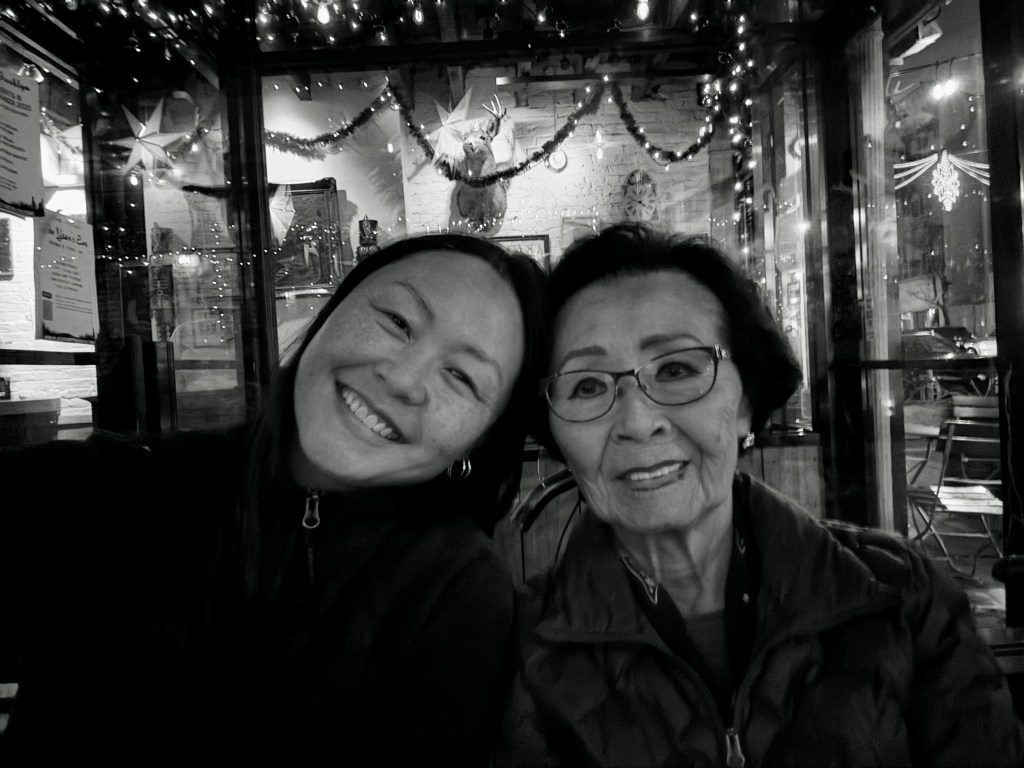
Every year, my husband and I give my sister and brother-in-law a break by taking my mom for a couple of months at a time. My mom lives with moderate Alzheimer’s — and during this most recent visit, it became clear that her needs have increased significantly.
This past Christmas, my mother-in-law — who also lives with Alzheimer’s — reached a point where my husband and I needed to take on her care as well.
Alongside that, we’re caring for our children — a teen and a tween — who are witnessing the slow, heartbreaking changes in their two beloved grandmothers. Women who were once pillars of strength, generosity, and steadiness in their young lives.
My husband and I take turns holding the emotional weight — grieving our mothers while they’re still alive, getting angry at a disease that strips away independence and memory, and trying to stay present for moments of connection and joy when they come.
At the same time, we’re working. Running businesses. Parenting. Paying for care. Living in New York City, where caregiving is as emotionally expensive as it is financially demanding.
And we’re also middle-aged.
Our bodies don’t recover the way they once did.
Energy is finite.
Sleep is interrupted.
Perimenopause is real.
We’re often running on fumes.
I know we are not alone in this.
High-Performing Caregivers Are Everywhere
As I sit with my own experience, I keep thinking about the high-performing caregivers I work alongside every day:
Coaches holding athletes through injury and disappointment.
Athletic trainers caring for bodies that don’t heal on schedule.
Clinicians sitting with grief, fear, and identity loss.
Administrators absorbing pressure from every direction.
Parents trying to support young athletes while managing their own lives and losses.
Many of the people tasked with caring for athletes are also:
- caring for children
- caring for aging parents
- navigating health changes of their own
- managing financial and career pressures
- carrying invisible grief and chronic stress
And yet, the expectation often remains the same:
Show up.
Hold it together.
Be steady.
Be strong.
When the Old Recovery Models Stop Working
High performers are used to pushing through.
We’re trained to override fatigue, minimize pain, and delay care until later. That mindset can work — until it doesn’t.
At some point, replenishment, recovery, and self-care need to change.
Not because we’re weaker.
But because the load is different.
What once worked — grinding harder, squeezing rest into the margins, telling ourselves we’ll recover “after this season” — may no longer be sustainable when caregiving, aging bodies, and cumulative stress are part of daily life.
This isn’t a personal failure.
It’s a signal.
Care for the Caregiver Is Not a Luxury
In sport, we talk a lot about athlete care.
But care doesn’t exist in isolation.
When caregivers are depleted:
- attunement becomes harder
- patience shortens
- flexibility narrows
- old scripts get reused because there’s no energy to rethink them
Not because people don’t care —
but because caring without support has limits.
Caring for caregivers is not indulgent.
It’s not a bonus.
It’s not something to earn after everything else is done.
It is foundational.
A trauma-informed lens applied inward — toward the caregiver — asks different questions:
What does my body need now, not years ago?
Where am I carrying more than I can sustainably hold?
What kind of support would make this care possible — not just admirable?
How do I tend to my own nervous system while supporting others?
When caregivers are supported, athlete care improves.
When caregivers are supported, systems become more humane and responsive.
When caregivers are allowed to be human, care becomes more ethical — and more effective.
This Is Part of Athlete Care
Caring for high-performing caregivers is not separate from athlete care.
It is athlete care.
Because athletes are shaped not only by training plans and performance metrics, but by the nervous systems, energy, and capacity of the people around them.
When we tend to the people who hold athletes — coaches, parents, clinicians, staff — we create environments where athletes don’t have to carry everything alone.
A Quiet Invitation
If this resonates, I want you to know:
You are not weak for needing different kinds of care now.
You are not failing because your recovery looks different.
You are not alone in holding more than you ever expected to carry.
This is the heart of the consultation, training, and reflective spaces I offer — working alongside athletes and the people who care for them, to build cultures that honor performance and humanity.
Not by tearing sport down.
But by helping it grow wiser.
Standing in Solidarity
And so I end with a wish:
May care and support find you, too.
May those of you who are holding others feel held.
May those of you who are supporting, leading, and caregiving remember that you are worthy of care yourself.
Standing in solidarity with all who are in caring roles — especially those who are quietly running on empty.
Warmly,
Laura
Stay Connected
For weekly reflections on athlete identity, sport culture, caregiving, and whole-person care, visit lcollinslcsw.com/athleteilluminated.
If you’re curious about consultation or training opportunities, feel free to reach out.
Reflection Prompts
Take a few moments to reflect:
- Where am I caregiving without enough replenishment?
- What has changed in my body, energy, or capacity that I may be ignoring?
- What support do I need to sustain the care I’m giving?
- How might tending to myself also support the people I care for?
Note: This and every Athlete Illuminated post is for educational purposes only and not a replacement for mental health treatment. If you are in urgent need of mental health support, please call 9-8-8. If you are experiencing an emergency, please call 9-1-1 or go to your nearest emergency room. For ongoing mental health concerns, consider seeking professional support or therapy.
 The Athlete Psychotherapist
Leave a comment