
Clay Rojas is a husband, father, decorated veteran of the United States Marine Corps, and mental conditioning coach who specializes in working with student-athletes all over the country.
His book, “Total Athlete, A Student Athlete Mental Health Field Guide,” is one that every high school and college athletic department needs to include in their orientation program to incoming athletes (and revisit, every year).
Rojas’ book carries beautifully simple and clear ideas and exercises regarding a wide range of mental health topics, from anxiety to body image dysmorphia to stress management.
But here’s the best part about it:
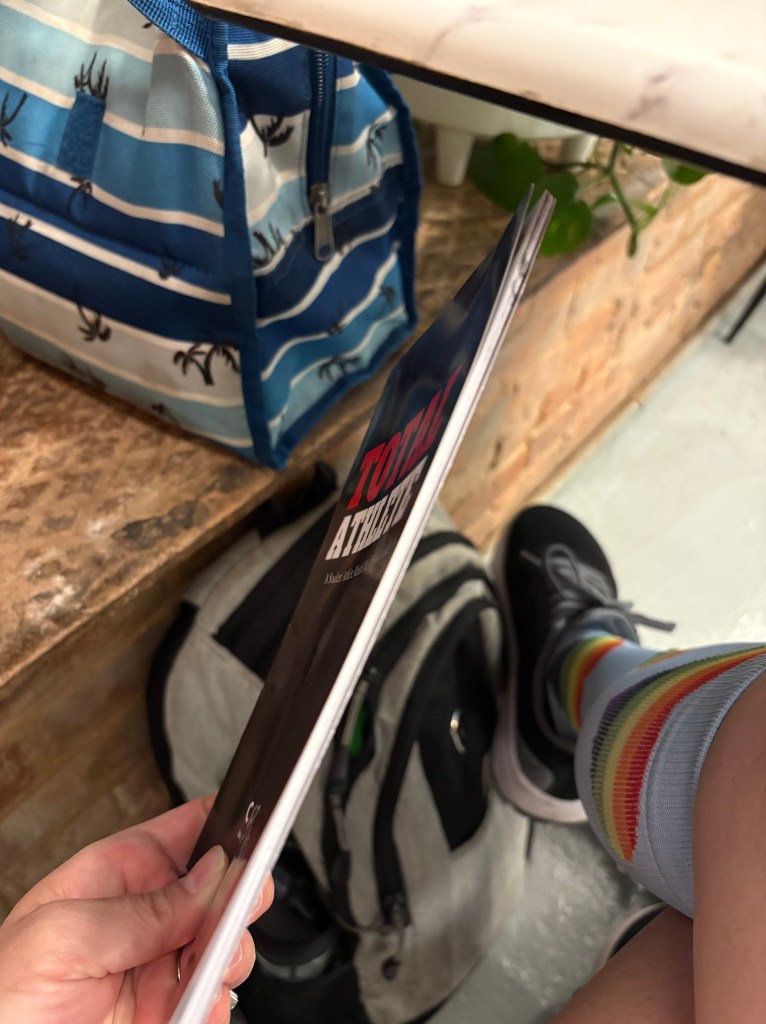
Check out it’s size. I’m holding it under the table in the coffee shop I’m working in right now.
It’s small and thin. Easy to carry. Easy to hide away.
Right now, the mere idea of “mental health IS health” in the sports world is still relatively new. Though we have more wonderful athletes, coaches, and support network people sharing their stories publicly today, we all know that this movement is akin to salmon swimming against the river’s flow.
The stigma of mental health in sports is still alive and well. And it prevents people from connecting with their community and getting the help that they truly need.
So Rojas’ book is a godsend to people. It’s discreteness puts the power in the student-athlete’s hands to look at it as needed, normalize mental health, and support the athlete to seek care and support when they are ready.
To coaches, athletic directors, trainers, and parents/guardians: This book is great for you, too. If you aren’t familiar with mental health concepts specific to the sports world, Rojas’ book certainly kickstarts your awareness about what your athletes may be going through.
Add this to your library today.
For more info, check out: https://www.totalathlete.life/
Note: This and every Athlete Illuminated post is for educational purposes only and not a replacement for mental health treatment. If you are in urgent need of mental health support, please call 9-8-8. If you are experiencing an emergency, please call 9-1-1 or go to your nearest emergency room. For ongoing mental health concerns, consider seeking professional support or therapy.
 The Athlete Psychotherapist
Leave a comment